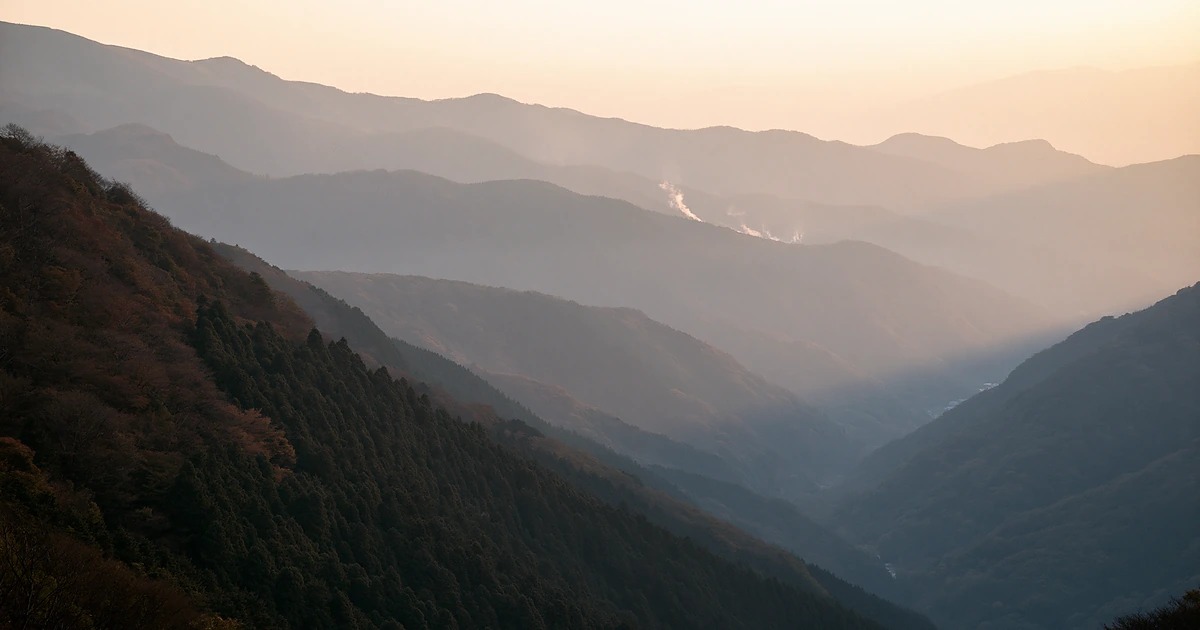
Seven Hakone ryokan, organized not by ranking but by the kind of quiet they offer.
Hakone has dozens of ryokan, and most foreign travelers will only stay at one of them on a given trip. The choice matters more than it appears. Two ryokan at similar prices in the same region can produce entirely different experiences — and the difference is rarely visible from the photographs.
This article is a selected guide to seven Hakone ryokan that, in our judgment, deserve consideration first. They are not the only good ryokan in Hakone. They are the ones we believe a careful first-time visitor should know about before looking further.
Each property has been evaluated against the same criteria — architecture, water, foreign-friendliness, the quality of arrival, and the integrity of what is offered for the price. The full methodology is on our Methodology page; the short version is that we look for ryokan where every part of the stay has been considered, and where a foreign traveler can settle into the rhythm without anxiety.
Three properties on this list are Heritage Luxury — ryokan where the building itself carries architectural lineage, and where the structure is part of what you are paying for. Four are Modern Quiet Luxury — newer properties, designed for privacy, comfort, and adult-focused service. The seven are spread across price tiers, from Approachable Luxury to Ultra-Luxury, because Hakone holds quietly excellent ryokan at multiple budgets.
We have also left out several Hakone ryokan that other guides routinely include. We explain why at the end of this article. Selection means little if rejection is invisible.
Stay Notes
Best for: Foreign travelers planning a first or carefully chosen ryokan stay in Hakone.
Selection size: Seven properties, all evaluated using the same criteria.
Categories: Heritage Luxury (3) and Modern Quiet Luxury (4).
Price range: From around ¥40,000 per person per night (Approachable Luxury) to ¥300,000+ per person (Ultra-Luxury).
Status: All seven have been Researched. None has yet been Visited; visit-based updates will be added as they happen, and the relevant entry will be relabeled.
Last verified: May 2026.
How These Were Chosen
Selection began with a wider list of Hakone ryokan, evaluated through international and Japanese review sources, the property’s own published information, and signals such as Relais & Châteaux affiliation, Michelin Guide listings, foreign-language review density, English-language operational details, and the presence (or absence) of common foreign-traveler concerns.
We did not select for fame.
We selected for fit between the property and the kind of traveler this site exists for: a foreign visitor who wants a quiet, considered onsen stay without unpleasant surprises around language, payment, dietary needs, tattoos, or arrival logistics.
For each property, we evaluated six dimensions — quietness, architecture, water, approach, foreign-friendliness, and value — and a seven-point Foreign-Friendly Confidence Check. The scores are explained in our Methodology, and are presented here in descriptive form rather than numerically, because we do not believe ranking ryokan against each other on a one-to-five scale produces useful editorial guidance.
Now to the seven.
Three Heritage Luxury Ryokan
These are properties where the building carries lineage — former villas of imperial families or industrial dynasties, preserved heritage structures, gardens shaped over decades. They are not chosen because they are old. They are chosen because their age has been respected.
Gora Kadan
Gora · Ultra-Luxury · ~37 rooms · Researched
Gora Kadan is the only Hakone ryokan currently affiliated with Relais & Châteaux — and was, in 1992, the first property in Japan to receive that affiliation. It occupies the site of the former summer villa of Kan’in-no-miya, a branch of the Imperial family. This is the closest thing Hakone has to a once-in-a-lifetime ryokan: a property where the building, the garden, the food, and the foreign-language service are calibrated to the standard expected by international luxury travelers, and where the price reflects that calibration honestly.
The architecture combines preserved heritage elements with restrained contemporary design, set within a garden the property describes as integral to the experience rather than as decoration. A 120-meter glass-walled colonnade runs through the building, ending at a wooden moon-viewing terrace facing Mount Myojogatake. Three hot spring sources serve the property. Most rooms include private bathing facilities; reservable private baths are also available. The water is alkaline simple, gentle on the skin, presented in the manner of a heritage Japanese inn rather than a contemporary spa.
Foreign-language reviews are consistently strong, the property has English-speaking staff available 24 hours a day, and the location — a three-minute walk from Gora Station — makes for a relatively easy arrival even with luggage. Some long-time visitors note that certain facilities show their age; this is a building with history, and history is visible at close range. Honesty: the price is not justified for every traveler. For honeymoons, anniversaries, and once-in-a-lifetime occasions where the Heritage Luxury experience matters more than the room’s modernity, Gora Kadan remains Hakone’s defining choice.
Quiet Luxury Index: Strong on architecture, distinctive on heritage; moderate on value at the highest price tier.
Foreign-friendly: High confidence. English support, accepted cards, international booking-platform presence. Confirm tattoo policy directly before booking.
Official site: gorakadan.com · Booking also available via major platforms.
Hakone Suishoen
Kowakidani · Premium · 23 rooms · Researched
Hakone Suishoen is built around a National Registered Tangible Cultural Property — the original Mitsui zaibatsu villa “Suishoen,” constructed in 1925 and built by Tokujiro Kawahara, the same craftsman who worked on the historic Fujiya Hotel. The heritage building now operates as the property’s restaurant, Momiji. The 23 guest rooms — opened in December 2007 — are arranged around the heritage building, each with its own architectural variation, and each fitted with its own private outdoor onsen bath sourced from the property’s own spring.
This is a quieter, more contained property than Gora Kadan. The setting is Kowakidani, a wooded valley between Miyanoshita and Gora, where the visitor count is lower than the busier areas downstream and the silence is more reliable. The grounds — roughly 3,000 tsubo (about 10,000 square meters) — include a 300-year-old maple tree at the heart of the garden. The architectural conversation is between heritage Japanese forms, preserved in the dining building, and contemporary interpretations in the guest rooms. The result is one of the most coherent Heritage Luxury experiences in Hakone, and arguably the strongest food-and-architecture combination on this list.
Foreign-language reviews are particularly positive, with consistent praise for the all-room private onsen, the dining at Momiji, and the sense of contained, considered quiet. The property offers free shuttle pickup from Kowakidani Station with prior arrangement, which is essential. For travelers who want heritage architecture but find Gora Kadan’s price out of range, Suishoen is the natural alternative — and on several dimensions, particularly water and architectural integration, it rates as strongly.
Quiet Luxury Index: Distinctive across architecture, water, and quietness. Strong value at the Premium tier.
Foreign-friendly: High confidence. Confirm tattoo and dietary specifics before booking.
Official site: hakonesuishoen.jp/en
Yoshiike Ryokan
Hakone-Yumoto · Approachable Luxury · 64 rooms · Researched
Yoshiike Ryokan demonstrates that Heritage Luxury does not require the highest price tier. The property occupies the site of the former villa of Yanosuke Iwasaki — second head of the Iwasaki family, who founded Mitsubishi — and preserves a roughly 33,000-square-meter (about 8-acre) traditional Japanese stroll garden called Sangetsuen. The original 1904 villa building still stands within the garden as a National Registered Tangible Cultural Property. Six self-owned hot spring sources supply the property, with no heating, no water mixing, and no recirculation. At up to 720 liters per minute, this is one of the most water-rich ryokan in Hakone.
The setting is Hakone-Yumoto, the gateway town, which means access is the most straightforward of any ryokan on this list — seven minutes on foot from the Romancecar terminus, with relatively flat ground and minimal stairs. For travelers who want a heritage ryokan stay without the access complexity of Gora or Sengokuhara, this is the strongest match in Hakone.
The trade is style. Yoshiike, founded in 1941, is a traditional Japanese inn, not a contemporary minimalist one. Some rooms have been renovated with restrained modern touches; others retain a more authentically older atmosphere. Foreign reviews praise the garden, the water, and the staff service; the most consistent caveat is that travelers expecting a contemporary luxury hotel aesthetic should consider one of the Modern Quiet Luxury properties instead. Dietary flexibility is explicitly described as inflexible by the property — confirm before booking if specific requirements apply.
Quiet Luxury Index: Distinctive on water and approach. Strong on garden integration. Moderate on contemporary comfort.
Foreign-friendly: Generally strong; confirm tattoo policy for shared bath access.
Official site: yoshiike.org
Four Modern Quiet Luxury Ryokan
These are newer ryokan — designed and built in the contemporary era — that approach Japanese sensibilities with modern materials, modern engineering, and a clearer set of accommodations for international travelers. The architecture is often quieter; the operations are usually more predictable; the foreign-language readiness tends to be higher.
Fufu Hakone
Gora · Premium · 39 rooms · Researched
Fufu Hakone, opened in January 2022, is one of the strongest Modern Quiet Luxury ryokan in the Hakone region — and was named to the Michelin Guide Hotels selection for 2025. All 39 rooms are individually designed, each with a private outdoor onsen bath drawing from the local spring, with views of the Hakone mountain range. The architecture works with — rather than against — the natural slope of the Gora hillside, and the materials selection draws from cedar, stone, and plant arrangements that quietly disappear into the surrounding landscape.
The property operates a complimentary shuttle from Gora Station, removing the most common access friction in the Gora-area ryokan world. A particular feature: the in-room baths use clear Gora-source water, while the public bathing area uses cloudy, milky-white water from the Sengokuhara source — guests experience two distinct hot spring qualities during a single stay. The kitchen serves a prefix-style Japanese cuisine that adapts to seasonal materials, with private dining options and dietary accommodations (including reduced-salt and vegetarian) for travelers who confirm needs in advance.
For a foreign traveler who wants the comfort and predictability of a contemporary luxury hotel combined with the architectural presence and ritual of a ryokan, Fufu Hakone is one of the most reliable choices in Hakone — particularly for honeymoons and first ryokan stays where surprise is unwelcome.
Quiet Luxury Index: Strong across architecture, water, quietness, and foreign-friendliness.
Foreign-friendly: High confidence. Michelin-listed. Confirm tattoo policy and winter access for early-year stays.
Official site: fufuhakone.jp/en
Hakone Ginyu
Miyanoshita · Premium · 20 rooms · Researched
Hakone Ginyu is a smaller property — 20 rooms — that sits at roughly 420 meters elevation along a steep valley in Miyanoshita, with every room facing the gorge and the Hayakawa river below. The architectural approach combines traditional Japanese sensibilities with subtle Balinese resort influences, an unusual fusion that has aged into a distinctive identity rather than a gimmick. The building runs down the slope: the entrance and lobby occupy the top floor, with rooms cascading below. Every room includes its own private outdoor onsen bath looking onto the valley.
The water is sodium chloride from a hot source, presented with some heating and mixing rather than purely as kakenagashi (free-flowing) — a nuance worth knowing for water purists, though most guests find the experience meets expectations. The dining is monthly-changing kaiseki served in private dining rooms or in-room. International reviews — including coverage in Conde Nast Traveler — are largely positive, with consistent emphasis on the sense of escape and the quality of the bath placement. The property is sometimes described as one of the harder Hakone ryokan to book, particularly during foliage season.
Ginyu suits travelers who want a sense of being away from everything else, who appreciate strong views and considered architecture more than perfectly polished service, and who are willing to accept slightly more access friction in exchange for the property’s particular character. The walk from Miyanoshita Station is three minutes, but the road is steep. For a couple’s escape that is meant to feel different from a hotel, Ginyu does what fewer Hakone ryokan attempt.
Quiet Luxury Index: Distinctive on architectural setting and view. Moderate on approach.
Foreign-friendly: Generally strong; English support available but variable. Confirm tattoo policy directly.
Official site: hakoneginyu.co.jp
Gora Byakudan
Gora · Premium · 16 rooms · Researched
Gora Byakudan occupies a roughly 3,700-tsubo (about 12,000 square meter) section of deciduous woodland in Gora — an unusual amount of land for a Hakone luxury ryokan with only 16 rooms — and uses that land as the central architectural device. All rooms include a private outdoor onsen bath; the property’s own hot spring source, drawn from a well 480 meters underground, delivers 88.9°C alkaline sodium chloride water at 55 liters per minute. The water carries a distinctive golden-amber color, unusual even among Hakone’s mineral-rich springs.
Architecturally, Byakudan was designed to feel embedded in the forest rather than placed onto it. Materials are restrained, contemporary, and selected with care; furnishings draw from specific Japanese craftspeople rather than catalog inventory. The kaiseki dining draws on Manazuru and Sagami Bay seafood and local mountain produce, with strong reviews for the morning meal in particular.
Booking platform user ratings have been notably high (Booking.com regularly shows ratings around 9.6), and foreign-language reviews are consistently positive, including specific praise for vegetarian accommodations. Access requires a transfer from Kowakidani Station via shuttle, which the property arranges with prior notice. Among the Premium-tier Modern Quiet Luxury properties, Byakudan offers the strongest forest-setting experience; for travelers who want the bath, the woodland, and the golden water to feel like a single composition, this is the natural choice.
Quiet Luxury Index: Distinctive on water, quietness, and architectural integration with the woodland.
Foreign-friendly: Strong; confirm dietary specifics and card acceptance directly before booking.
Official site: byakudan.co.jp
Tensui Saryo
Gora · Premium · 34 rooms · Researched
Tensui Saryo combines a notable strength in Hakone’s Premium tier — direct walking access from Gora Station, three minutes on foot — with two distinct hot spring sources. The first is the soft alkaline simple spring of Kiga, historically presented to the Tokugawa shogunate and now used in the detached private room outdoor baths. The second is the more mineral-rich acidic sulfate-chloride spring of Owakudani, used in the public baths in cloudy, milky-white form. Few Hakone ryokan offer two genuine spring sources; Tensui’s water program is among the most considered in this category.
The architecture takes a wa-modern approach, drawing on materials including Hida-Takayama natural wood and Ryukyu tatami. Most rooms include a private bath, with reservable private baths and a foot-bath bar at the lobby also available. The setting is Gora’s village edge, with views toward Mount Myojogatake.
A practical note for foreign travelers: English support at Tensui is currently described as more limited than at Fufu Hakone or Gora Kadan, with the property’s English-language website operating partially through translation. The property also revised its food allergy accommodation policies in late 2025 — those with significant dietary needs should confirm specifics by direct email before booking. For travelers comfortable with bilingual operations and willing to clarify a few details in advance, this is not a barrier. The trade for that complexity is access (best on this list among Gora-area properties), water (two spring sources of historical depth), and value within the Premium tier.
Quiet Luxury Index: Distinctive on water, strong on approach. Moderate on foreign-language readiness.
Foreign-friendly: Moderate confidence. Confirm tattoo policy, English support, and dietary specifics before booking.
Official site: tensui-saryo.com
What We Did Not Include
Several Hakone ryokan that appear in other guides are absent from this list. The most notable:
Hakone Ashinoko Hanaori is a large and reasonably well-regarded lakefront property at Lake Ashi with 154 rooms and a buffet-style dining program. It has its strengths — particularly for families and travelers prioritizing the lake view — but it does not match the Quiet Luxury criteria this list applies. We may write about it separately as a Lake Ashi alternative.
Hakone Suimeisou in Yumoto is conveniently located and has its admirers, but its mid-range positioning without distinctive architecture, distinctive water, or a clearly differentiated foreign-traveler experience places it outside our selection threshold.
Sengokuhara Mitakeso is a small property with character that some travelers will find appealing, but its current foreign-language readiness and review trajectory do not meet the standard this list maintains.
We hold open the possibility of revising any of these positions if circumstances change.
How to Choose Between These Seven
The simplest way to choose is to ask what kind of quiet you are looking for.
For a once-in-a-lifetime stay where heritage and the international hospitality standard both matter, Gora Kadan is the defining choice in Hakone.
For Heritage Luxury at a meaningfully lower price than Gora Kadan, with arguably stronger architectural coherence and a quieter wooded setting, Hakone Suishoen is the alternative we would recommend first.
For a heritage ryokan stay at the Approachable Luxury price tier, with the easiest arrival of any property on this list, Yoshiike Ryokan is the natural choice — provided the traditional Japanese aesthetic is what you are looking for.
For a Modern Quiet Luxury stay where the whole experience is calibrated for international comfort without losing the ryokan rhythm, Fufu Hakone — newly Michelin-listed — is the most reliably foreign-friendly choice.
For a couple’s stay that is meant to feel different from a luxury hotel — with valley views, an unusual architectural fusion, and a strong sense of escape — Hakone Ginyu is what fewer Hakone ryokan attempt.
For a stay where the bath, the woodland, and the gold-colored water feel like a single composition, Gora Byakudan is the strongest forest-setting Modern Quiet Luxury property in the Gora area.
For travelers prioritizing easy station access combined with two historically distinct spring sources, Tensui Saryo is the most accessible Premium-tier option in Gora.
Before You Decide
For any of these properties, confirm five things directly with the ryokan before booking:
Whether dinner and breakfast are included in your specific plan.
Whether the private bath in your specific room category uses actual hot spring water (some lower-tier rooms at Premium properties may not).
The current tattoo policy if it applies to anyone in your party.
How to reach the property from Hakone-Yumoto with luggage, and whether shuttle service can be arranged.
Whether the cancellation policy aligns with the way you book travel — international platforms and direct booking sometimes carry different cancellation terms.
For the Premium and Ultra-Luxury properties on this list, the room category often matters as much as the property itself. The same ryokan can offer dramatically different experiences depending on whether you choose a standard room, a suite, a room with a private outdoor bath, or a room with dinner included.
If the stay is for an occasion you will remember for the rest of the trip, contact the ryokan directly before booking. The best Hakone ryokan respond to careful, specific questions with care.
Related Reading
Where Tokyo Goes to Rest — A quiet guide to Hakone Onsen for first-time ryokan travelers
The Architecture of Quiet — Why Japan’s best ryokan feel calm before anyone says a word
Private Onsen in Hakone — A practical guide for couples, first-time visitors, and tattooed travelers
Getting to Hakone Without Stress — The full route from Tokyo
Reading a Ryokan — What to notice on your first stay
Hakone has more ryokan than this list suggests, and many of them have their own quiet virtues. But seven is enough for most foreign travelers planning a first stay in this region. The work of choosing should be careful, not exhaustive.
What unifies these seven, across the gap between heritage and modern, between Ultra-Luxury and Approachable, is that each has been built — or in some cases preserved — with the understanding that a stay in a ryokan is not the same as a stay in a hotel. The proportions are different. The water matters in a different way. The approach is part of the architecture. The first cup of tea is not an afterthought.
If you are choosing your first Hakone ryokan, the right choice on this list is rarely the most famous one. It is the one whose particular kind of quiet matches the trip you are actually taking.
— Fuko
This article contains affiliate links to booking platforms where they apply. When a reader books through one, we may receive a small commission at no extra cost. Booking links are chosen based on which platform offers the best experience for the specific ryokan, never on commission rate. Where no affiliate relationship currently exists, we link to the property’s official site only. See our methodology for the full explanation.